
Control Plane: SpaceX’s $60 Billion Bet on Cursor
SpaceX’s April 21, 2026 announcement of a strategic partnership with Cursor, with an option to acquire the AI-native coding platform for $60 billion later this year or commit $10 billion to collaborative development, marks a pivotal moment in the AI infrastructure stack. Far beyond a simple compute-for-equity exchange, the deal positions SpaceX (via its xAI integration) at the emerging “control plane” for software creation: the orchestration layer where frontier models meet real-world developer workflows, generating proprietary, economically valuable training data at unprecedented scale.
Cursor, already generating over $2 billion in annualized recurring revenue (ARR) with explosive growth from $1 billion just months prior, delivers a multi-model, agentic environment that shifts developers from coders to supervisors of AI systems. Access to xAI’s Colossus supercluster, scaling toward one million H100-equivalent GPUs, removes Cursor’s primary bottleneck, enabling next-generation reinforcement learning and pretraining for its proprietary Composer models.
For institutional investors, this transaction underscores three underappreciated theses:
- Orchestration > raw intelligence: The routing, agent coordination, and human-in-the-loop layer may prove more defensible than any single model.
- Real-work data is the ultimate moat: Accepted, shipped code from enterprise repositories creates feedback loops orders of magnitude more valuable than synthetic or conversational data.
- Monetization flywheels are accelerating: AI coding tools, already a $5–8 billion market growing at 24–27% CAGR toward $25–90 billion by 2030–2035, represent one of the clearest paths to enterprise ROI in the broader $467 billion AI software ecosystem.
With SpaceX targeting a >$2 trillion IPO valuation potentially as early as June 2026, this move materially enhances its AI narrative, data assets, and post-IPO growth optionality.
The Deal Structure: A Priced Call Option on Infrastructure
Announced via X, the agreement grants SpaceX immediate integration with Cursor’s leading product and distribution to expert developers, while Cursor gains priority access to Colossus. The binary outcome, $60 billion acquisition or $10 billion partnership payment, reflects disciplined financial engineering ahead of SpaceX’s planned public listing. It preempted Cursor’s near-term $2 billion fundraising round at a ~$50 billion valuation, locking in strategic optionality without immediate balance-sheet impact.
This structure mirrors classic venture call options but at infrastructure scale: partner now for mutual acceleration; own later if Cursor solidifies as the default interface for agentic software engineering.
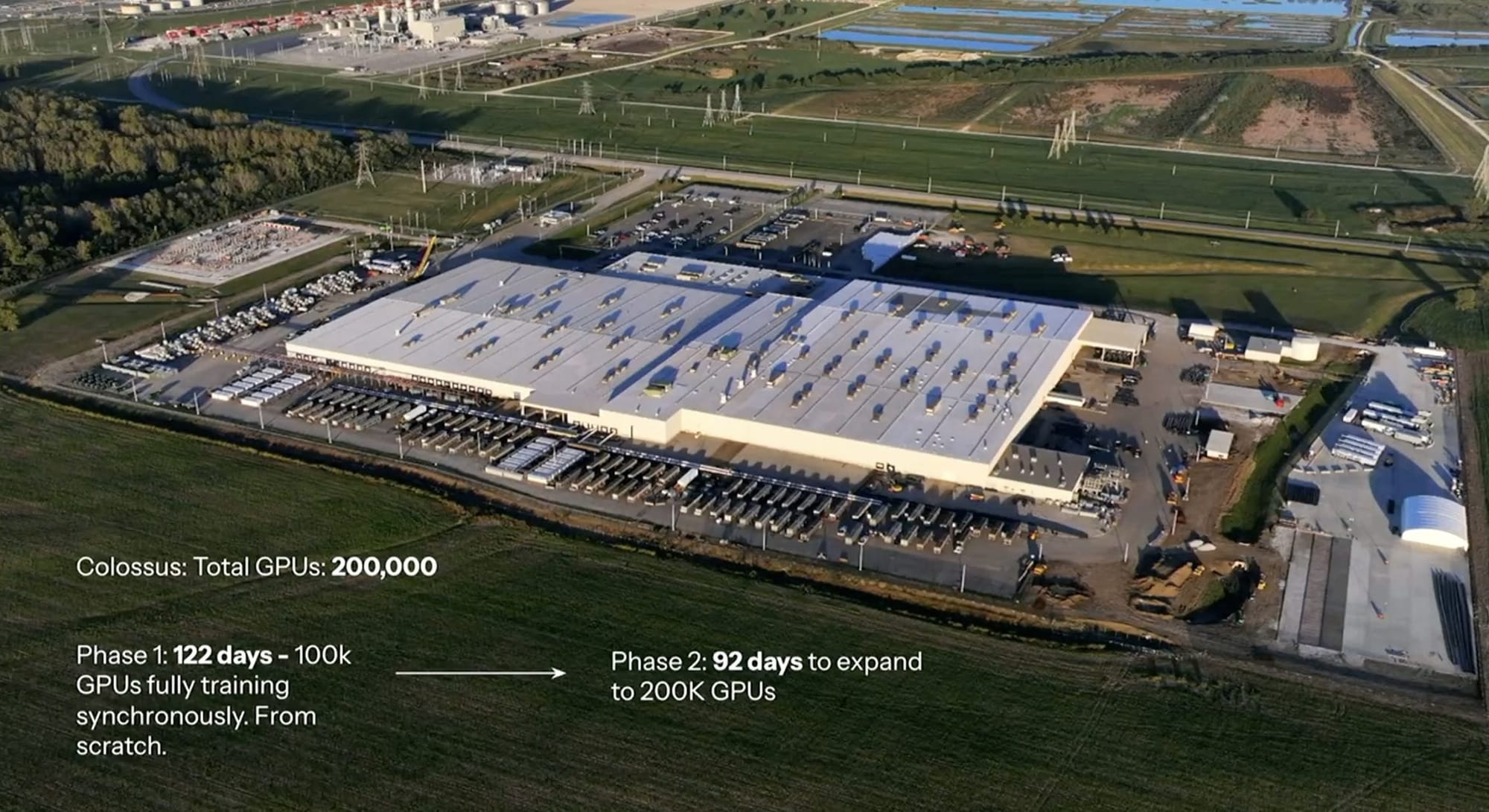
Aerial view of xAI’s Colossus facility in Memphis, the compute backbone powering the partnership (scaling toward 1M GPUs).
Cursor: From IDE to Agentic Operating System
What began as a VS Code fork with superior autocomplete has evolved into a full agentic platform. Key capabilities include:
- Composer models (proprietary agentic series): Composer 1.5 scaled reinforcement learning 20x; Composer 2 added continued pretraining for frontier performance at fraction of competitor costs. Thinking tokens enable multi-step planning, codebase reasoning, and iterative refinement.
- Multi-agent orchestration: Background agents, parallel execution, repo-wide planning, test running, bug fixing, PR review.
- Human-AI collaboration layer: Real-time evaluation, acceptance/rejection, and modification of outputs.
This is not autocomplete. It is the transition from “developers write code” to “developers direct fleets of specialized agents.” Early data shows dramatic productivity lifts for complex tasks, with Cursor reporting strong enterprise traction (50k+ teams, significant Fortune 500 adoption).
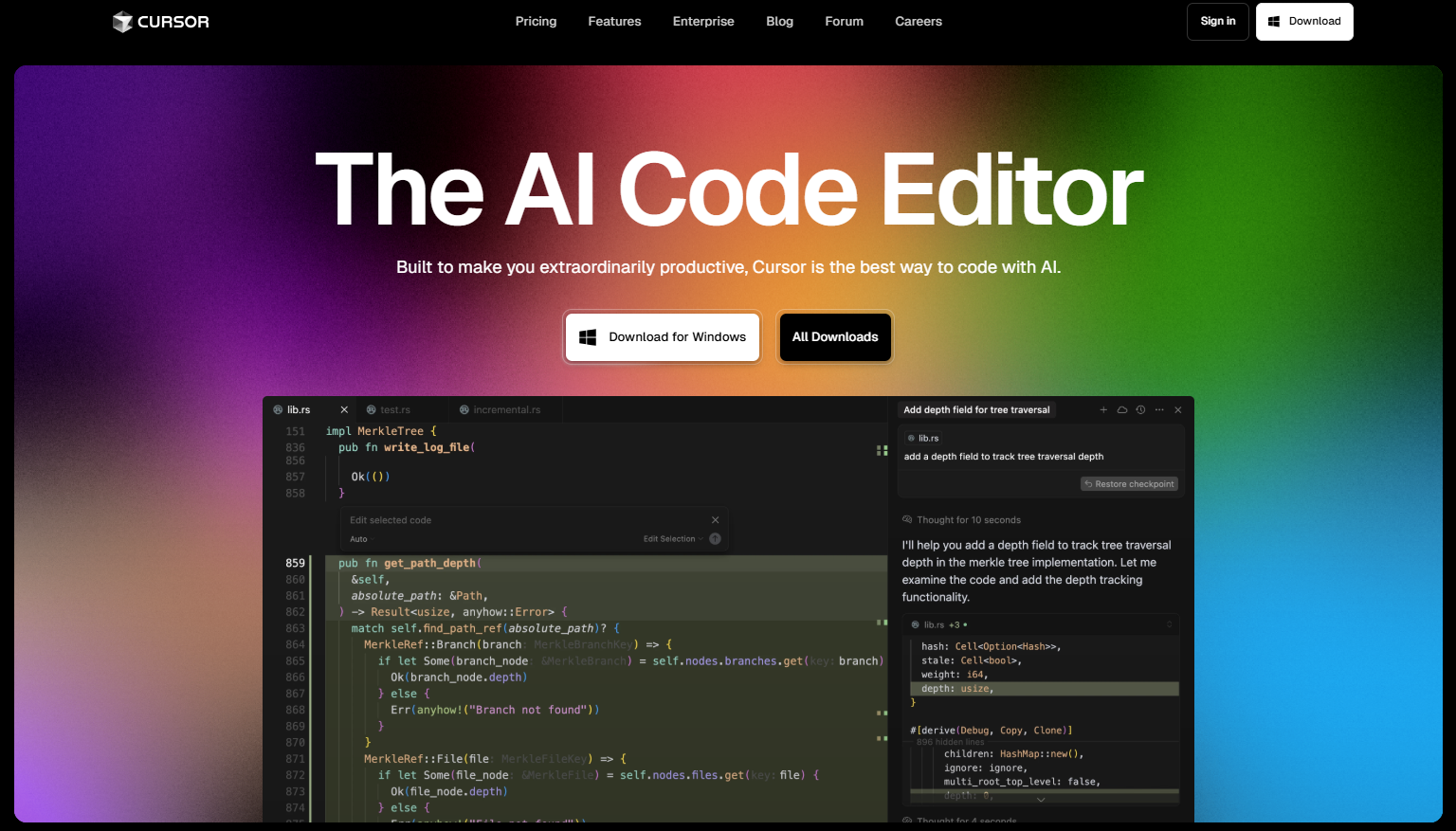
Cursor’s AI-native interface in action: agentic editing, codebase understanding, and real-time AI collaboration.
The Scarce Asset: Production-Grade Feedback Loops
While the market obsesses over parameter counts and benchmarks, the true differentiator is the environment where AI confronts production reality. Inside Cursor:
- Developers pose complex, context-rich problems.
- Agents generate, test, and iterate solutions.
- Humans ship (or reject) outcomes into live repositories.
This creates “economic-grade” training data—high-signal, real-world performance signals unavailable to pure model labs. Multi-model routing (OpenAI, Anthropic, Google, xAI/Grok) further enriches the dataset, turning Cursor into a neutral scoreboard of model efficacy. SpaceX/xAI gains visibility into what actually works without building the full stack from scratch.
Market Landscape: The AI Developer Tools Explosion
The addressable market is expanding rapidly:
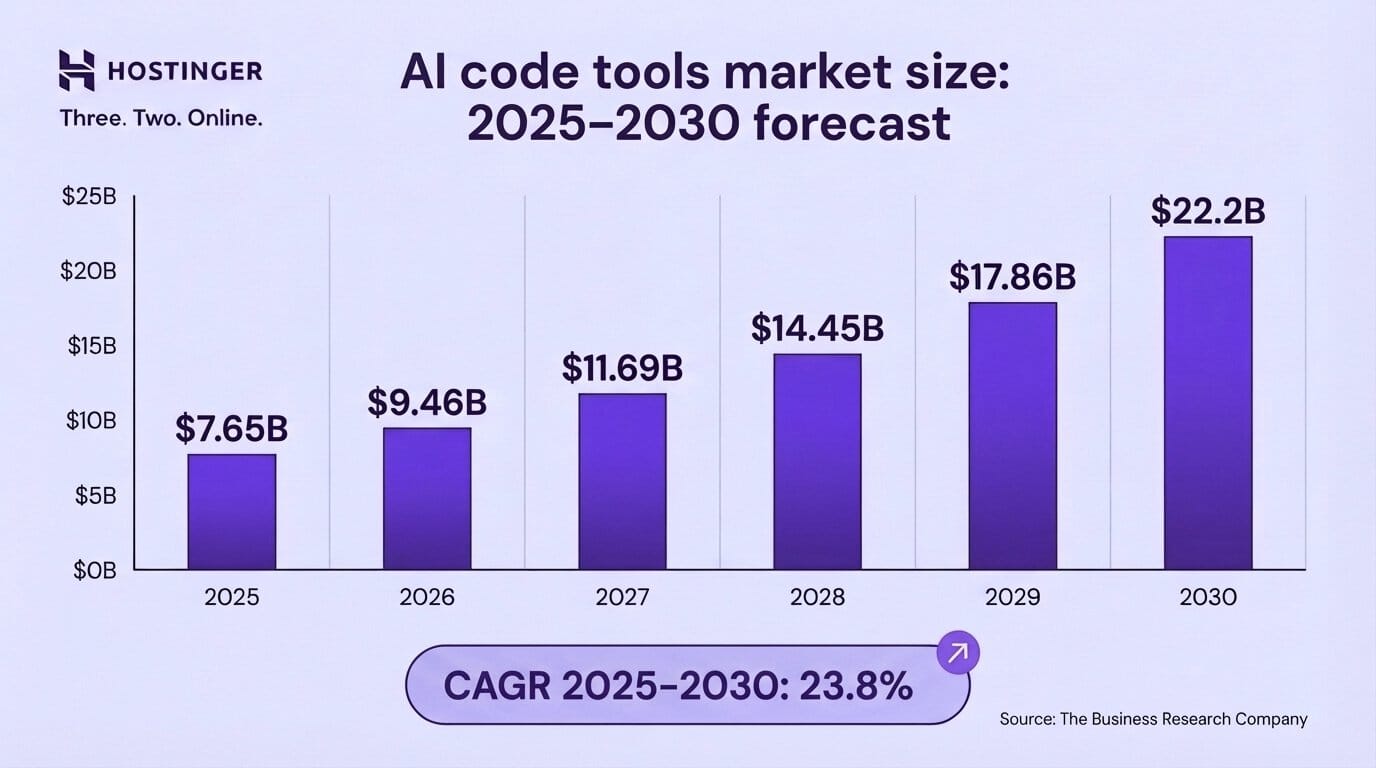
AI code tools market forecast: From ~$7.65B in 2025 to $22.2B by 2030 (CAGR 23.8%). Broader projections reach $90B+ by 2035 as agentic capabilities mature.
Global developer population (~28–47 million) increasingly relies on these tools, with 85% adoption rates and multi-tool stacking the norm. Cursor’s $2B+ ARR trajectory (doubling in months) validates clear willingness-to-pay and measurable ROI, critical in an era where many AI applications struggle with monetization.
Competitive dynamics favor integrated platforms: standalone autocomplete tools risk commoditization, while full orchestration layers capture workflow lock-in.
SpaceX/xAI Strategic Imperative
For an organization with world-class compute infrastructure but pressing needs for sustainable AI monetization, Cursor offers a bridge: proven enterprise revenue, measurable productivity gains, and a distribution channel to the world’s most sophisticated developers. The partnership accelerates xAI’s coding capabilities (a noted gap versus Claude or GPT) while feeding Colossus with high-value training signals.
In the context of SpaceX’s impending IPO, the deal bolsters the AI growth narrative, potentially justifying premium multiples by demonstrating real-world application of Colossus beyond internal Starship or satellite optimization.
The Control Plane Thesis: Why This Matters for the Next Decade
As AI agents assume execution of software development, the decisive layer shifts from model training to management:
- Intelligent task routing across providers.
- Agent coordination and reflection loops.
- Human oversight and deployment gates.
Cursor is evolving precisely into this infrastructure. Winners will control workflows; losers will be relegated to commodity components. Standalone dev tools and manual-labor models face structural disruption.
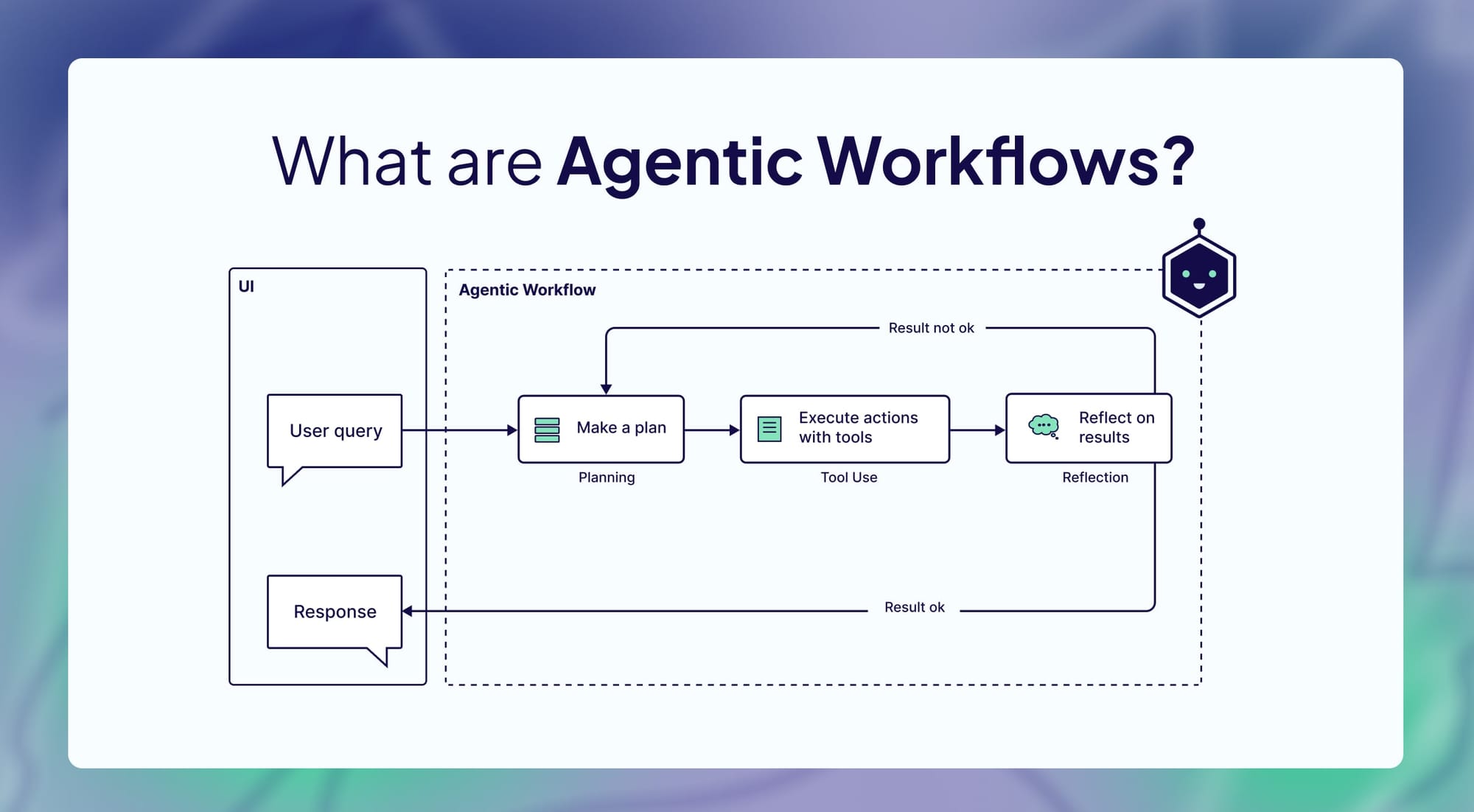
Agentic workflow diagram: Planning → Tool use → Reflection → Iteration. Cursor embodies this shift from reactive LLMs to autonomous coding agents.
Investment Implications
- SpaceX IPO upside: The $60B optionality (or $10B cash infusion) adds tangible AI assets and data moat to an already ambitious $2T+ valuation target.
- Broader AI ecosystem: Validates orchestration platforms as high-margin, scalable infrastructure plays. Watch for similar compute-for-control deals.
- Productivity multipliers: 30–55%+ developer efficiency gains could accelerate global software output, with second-order effects across industries.
- Risk-adjusted returns: Multi-model neutrality preserves adoption; any forced favoritism toward Grok could erode trust.
Key Risks
- Trust erosion: Heavy-handed integration favoring xAI models could fragment the developer community.
- Execution on acquisition: Regulatory, cultural, or talent retention challenges in a $60B deal.
- Market saturation: If agentic capabilities commoditize faster than expected, the moat narrows.
- Macro compute constraints: Energy and supply-chain limits on scaling Colossus.
Closing Perspective
This is not merely a coding tool deal. It is a strategic positioning for the layer that will govern how intelligence is applied to build the digital economy. In a world where AI increasingly creates software, the highest-value real estate belongs to those who control the interface, the data flywheel, and the orchestration plane.
SpaceX has secured a front-row seat—and a call option on ownership. For institutional portfolios seeking exposure to the next phase of AI infrastructure, this quiet move merits close monitoring. The future of software is being orchestrated today.
Jungle Inc — We break the future before it breaks the news.
Sources and data as of April 24, 2026. All projections subject to market and execution risks. Not investment advice.